


- Thread Author
- #1





- Joined
- Sep 25, 2023
- Messages
- 39,265
- Reaction score
- 3,158
- Trophy Points
- 180
- Location
- Philippines
- D Bucks
- 💵8.041400
- Referral Credit
- 100
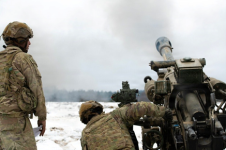
According to the report, the US Army Yuma Proving Ground (YPG) may be seeing the next generation of the service’s artillery in action, as it tests a rocket-boosted round designed to deliver more accurate engagements from longer ranges.
According to Steve Flores, YPG Long Range Precision Fire Integrator, said that the Next-Generation Rocket Assisted Projectile (NGRAP) aims to exceed the 30-kilometer (18.6-mile) range of current artillery, including standard 155mm howitzers. It also said that it is set to replace the army’s legacy M549A1 rockets, which have been in service for more than five decades already.
The report said that, unlike older rounds that rely on multiple components to seal the rocket motor, the NGRAP features an integrated rear structure to improve how it holds up to higher stress. It added that YPG testers are also exploring ways to keep the system operational under extreme combat conditions.
YPG test officer Jonathan Armijo said that they have standard charges they upweight with extra propellant to try to reach the maximum permissible pressure for these cannons to put these bullets through the highest amount of stress that they would see in this caliber tube.
Additionally, the M549A1 high-explosive, rocket-assisted rounds have long served the army in harassment and interdiction missions.
Source: NextGen Defense

According to Steve Flores, YPG Long Range Precision Fire Integrator, said that the Next-Generation Rocket Assisted Projectile (NGRAP) aims to exceed the 30-kilometer (18.6-mile) range of current artillery, including standard 155mm howitzers. It also said that it is set to replace the army’s legacy M549A1 rockets, which have been in service for more than five decades already.
The report said that, unlike older rounds that rely on multiple components to seal the rocket motor, the NGRAP features an integrated rear structure to improve how it holds up to higher stress. It added that YPG testers are also exploring ways to keep the system operational under extreme combat conditions.
YPG test officer Jonathan Armijo said that they have standard charges they upweight with extra propellant to try to reach the maximum permissible pressure for these cannons to put these bullets through the highest amount of stress that they would see in this caliber tube.
Additionally, the M549A1 high-explosive, rocket-assisted rounds have long served the army in harassment and interdiction missions.
Source: NextGen Defense