


- Thread Author
- #1





- Joined
- Sep 25, 2023
- Messages
- 39,286
- Reaction score
- 3,158
- Trophy Points
- 180
- Location
- Philippines
- D Bucks
- 💵8.308400
- Referral Credit
- 100
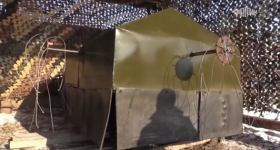
According to the report, as Kamikaze drones continue to reshape modern warfare, Russian troops are testing an unusual countermeasure: a ground robot fitted with spinning fans designed to swat incoming unmanned aerial vehicles (UAVs) out of the sky.
The report stated that footage shared online shows the Depesha robotic vehicle wrapped in a steel grille and rotating shafts with thin cables, creating a moving barrier around the platform.
The report also said that the setup appears designed to disrupt or destroy small drones before they can strike mechanically. It said that the prototype, reportedly being tested in the Zaporizhzhia region, reflects an early-stage configuration, as it lacks a cargo bay, mounted weapons, and dedicated armor.
The report said that the robot has only been shown operating on flat, unobstructed ground, leaving its performance in dense vegetation or uneven terrain an open question. It is built on an all-wheel-drive chassis with independent suspension and dedicated electric motors. The Depesha robotic system is designed for stability across rough terrain.
The report added that with a reported payload capacity of up to 200 kilograms (441 pounds), it can support resupply, casualty evacuation, or armed strike roles when fitted with a combat module. It can also reportedly reach speeds of up to 30 kilometers (18 miles) per hour, though its operational range and endurance remain undisclosed.
Additionally, Russian firm Vysokotochnye Kompleksi revealed in January 2025 that it had delivered additional Depesha platforms to Moscow’s forces.
Source: NextGen Defense

The report stated that footage shared online shows the Depesha robotic vehicle wrapped in a steel grille and rotating shafts with thin cables, creating a moving barrier around the platform.
The report also said that the setup appears designed to disrupt or destroy small drones before they can strike mechanically. It said that the prototype, reportedly being tested in the Zaporizhzhia region, reflects an early-stage configuration, as it lacks a cargo bay, mounted weapons, and dedicated armor.
The report said that the robot has only been shown operating on flat, unobstructed ground, leaving its performance in dense vegetation or uneven terrain an open question. It is built on an all-wheel-drive chassis with independent suspension and dedicated electric motors. The Depesha robotic system is designed for stability across rough terrain.
The report added that with a reported payload capacity of up to 200 kilograms (441 pounds), it can support resupply, casualty evacuation, or armed strike roles when fitted with a combat module. It can also reportedly reach speeds of up to 30 kilometers (18 miles) per hour, though its operational range and endurance remain undisclosed.
Additionally, Russian firm Vysokotochnye Kompleksi revealed in January 2025 that it had delivered additional Depesha platforms to Moscow’s forces.
Source: NextGen Defense